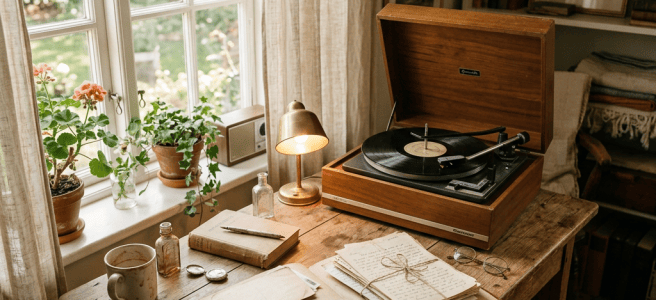
I have a small problem with the past: it keeps showing up in the present wearing my old clothes. A song from high school. The smell of rice cooking when everyone was still home. My father’s laugh before I understood how much I would miss it.
We call this nostalgia. For a long time, the word sounded like a warning label—sentimental, backward-looking, perhaps one step away from buying a decorative sign that says Good Vibes Only. But nostalgia can be more than an escape hatch. Used honestly, it can become a small spiritual practice: remembering where we have been so we can notice where we are.
That does not mean pretending the past was perfect. Nostalgia is not a courtroom in which every old year gets acquitted. It is closer to an examen of memory. We look back with affection and a little ache, asking: Who was there? What did I receive? What did I become?
Psychologists define nostalgia as “a sentimental longing for one’s past,” and the research is more interesting than the greeting-card version. In six experiments, researchers found that nostalgia can strengthen social connectedness—a sense of belonging and acceptance—and, through that connection, support self-continuity: the feeling that the person I was and the person I am are not complete strangers.
Another series of five studies, involving 1,074 participants, linked nostalgia with a stronger connection among past, present, and future selves. The authors also tested the relationship while accounting for rumination, which is different. Rumination circles the wound. Nostalgia, at its best, tells the larger story. The study’s findings suggest that remembering can help us build a coherent narrative rather than simply replay distress.
Here is the spiritual distinction I find useful: escape asks memory to remove me from today; remembrance asks memory to return me to today with deeper roots.
When I play an old song, I am not required to move back into 1987. Thank goodness. The hair alone would be an act of penance. I can let the song remind me of friendships, risks, and ordinary mercies. I can notice what endured. I can grieve what did not. I can send a message to someone who helped make that chapter good.
That is why nostalgia can be communal rather than merely private. The American Psychological Association has noted that nostalgic memories often include the presence and support of family or friends, helping people feel connected across distance and loss. The point is not to worship the past. It is to receive its witnesses.
So, what happened? We remembered. What did it mean? The memory showed us that our lives are made of relationships, not just milestones. What can we carry forward? Perhaps one honest memory, held gently, then turned into gratitude or a phone call.
Try it tonight: choose one memory that still feels warm. Ask what it gave you, who shared it, and what it asks of you now. Then come back to the room you are in. Nostalgia should not be a door that locks behind us. It can be a window—open just long enough to let some light reach the present.

