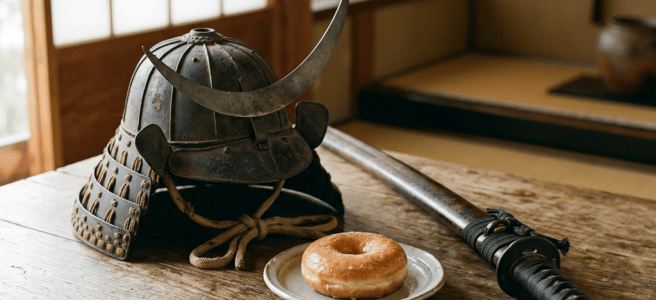
I once saw a coffee mug that said, “Train like a samurai.” It was beside a plate of office doughnuts. I admired the ambition and ate the doughnut.
Still, the question is useful: what would a warrior ethic have to do with a household budget?
First, a small historical brake pedal. Bushido is often presented as one timeless Japanese code. It was not quite that tidy. A University of British Columbia study notes that premodern warriors did not share one universally accepted ethic; ideas and loyalties shifted by era and region. Even the word bushido appears late and changed meaning over time. Britannica’s overview likewise traces a changing tradition, shaped by Buddhist and Confucian thought and later repurposed for modern national instruction.
So this is not an attempt to turn your 401(k) into a miniature castle keep. It is a modest borrowing: a few virtues, translated carefully into ordinary money decisions.
1. Frugality is freedom, not a costume.
Frugal living was among the qualities associated with Bushido in later summaries. In personal finance, that does not mean performing poverty or refusing every pleasant thing. It means making enough room between income and spending that a surprise bill does not become a personal crisis. A budget is less a punishment than a little patch of open ground.
2. Discipline beats mood.
The samurai image is all dramatic resolve: rain, sword, excellent posture. Most financial progress is less cinematic. It is an automatic transfer on payday, repeated while you are tired, distracted, or mildly annoyed. Investor.gov recommends automatic deposits to an emergency fund and regular investing over time, even suggesting a fixed affordable amount or a portion such as 5% or 10% of income. The virtue here is not intensity. It is returning to the practice.
3. Courage includes refusing the exciting mistake.
Courage in investing is not clicking “buy” on the loudest story in the room. Sometimes it is declining a hot tip, paying down expensive debt, or keeping emergency savings somewhere boring and accessible. The brave choice may look, from the outside, like nothing happened. That is often the point.
4. Loyalty needs a better object.
Historical Bushido could place supreme loyalty in a lord or state. We should not import that hierarchy into family finances. But we can ask what our money serves: a child’s stability, a spouse’s breathing room, a future self who may be sick or between jobs. A savings plan is a small declaration of allegiance to people and purposes beyond today’s impulse.
What happened? A varied warrior tradition was later gathered into a powerful story about character. What did it mean? Discipline is not a personality trait reserved for heroes; it is a structure that helps ordinary people keep promises. What can we carry forward? Choose one quiet practice: an automatic transfer, a weekly spending check, or a 24-hour pause before a major purchase.
No sword required. The doughnut remains optional.