
Before Self-Help, There Was Apprenticeship

Two woodworkers assembling a wooden frame at a workshop bench

I have bought enough self-help books to build a small, slightly judgmental bookshelf. Most promise a better life through a plan: wake earlier, track the habit, optimize the morning. Useful, sometimes. But before we learned to call everything a system, people learned by standing near someone who already knew how to do the thing.

That older pattern was apprenticeship. Not a weekend course. Not a motivational quote over a photo of a mountain. You watched, copied, failed, received correction, and tried again. The point was not merely to collect information. It was to become the sort of person who could notice what mattered and respond well.

In early modern Europe, apprenticeship was probably the largest organized form of learning available to ordinary people, and artisans commonly began that way, according to historian Patrick Wallis in Science in Context. The arrangement was imperfect. Masters did not always teach systematically. Apprentices had to find other workshops, books, and teachers. Still, the workshop gave learning a place, a rhythm, and a human face.

The same logic lives in music. A young player does not become a musician by downloading every scale chart. She listens to a teacher phrase a line, tries it, hears where it goes flat, and discovers that “almost right” is a useful address. Modern learning researchers call this cognitive apprenticeship: authentic work beside someone more experienced, with scaffolding, reflection, and even productive failure. In plain English, you get better by doing the real thing with company.

Faith has an apprenticeship shape, too. In the Gospel accounts, Jesus does not simply hand the disciples a syllabus and wish them luck. He says, “Come, follow me.” They watch him pray, teach, welcome, confront, rest, and serve. Then they are sent to practice. One theological account describes those three years of following, watching, and hearing as a kind of theological apprenticeship, aimed at preparing the disciples to continue the work. The pattern is wonderfully concrete: learn a way of life by living near it.

The American story kept this practical tradition in view. The U.S. Department of Labor’s history points to George Washington, Benjamin Franklin, and Paul Revere as early apprentices who later became nationally known. The detail is almost funny: before the résumé, before the personal brand, there was a master, a bench, and a beginner doing the unglamorous work.

What happened? People were formed in proximity to a craft, a community, or a teacher. What did it mean? Skill was never only a private possession; it carried a responsibility to pass something on. What might we carry forward? Choose one practice you respect and find a living example: a musician, craftsperson, elder, or faithful friend. Watch closely. Try the work. Let correction be a gift instead of a verdict. A life may still need goals, but it probably needs a few good teachers more.

Formation Happens in Seasons, Not Sprints

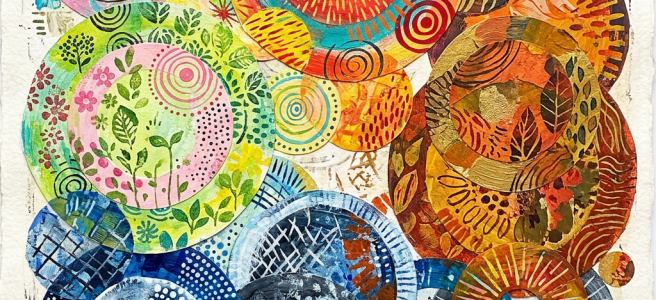
Colorful abstract artwork featuring overlapping patterned circles and botanical motifs

I have a bad habit of treating my life like a software launch. Pick a goal, announce the goal, buy the notebook, and expect a new personality by Thursday. The notebook is usually beautiful. The personality remains in beta.

That is why the Christian liturgical year keeps catching my attention. It does not ask us to become a finished person in one heroic burst. It gives us a rhythm. The United States Conference of Catholic Bishops describes a cycle of seasons and saints that returns again and again: Advent, Christmas, Lent, the Triduum, Easter, and Ordinary Time. The point is not merely to remember dates. The cycle is meant to draw people into the mystery of Christ and into lives shaped by it.

Formation is repetition with meaning

Modern life loves the sprint. Thirty days to a new body. Ninety days to a new business. One inspirational podcast to a new soul. Some of these promises are useful. Most are wearing very fast shoes.

A season works differently. It gives a theme enough time to sink below the level of a slogan. Advent, for example, is not simply a countdown to Christmas. The USCCB presents it as a four-week season of preparation for both Christ’s birth and his promised return, a time of alertness, hope, and a heart made quieter. You do not “win” Advent. You practice receiving it.

Historically, this rhythm grew rather than dropped from the sky fully assembled. Britannica traces Sunday worship to the apostolic age and describes how other observances and seasons developed over centuries. That matters. It means formation can be organic. A community repeats what helps it remember, then refines the repetition until the calendar becomes a kind of shared memory.

The long middle counts

We tend to notice beginnings and endings. New Year’s Day. Graduation. Retirement. Before-and-after photos. But the long stretch called Ordinary Time makes a quieter claim: ordinary days are not empty space between meaningful events. They are where a life is practiced. Scripture is heard. Patience is attempted. We fail, apologize, and try again without a dramatic soundtrack.

This is good news for anyone whose progress feels unimpressive. A season gives you permission to return. You can begin Lent tired. You can enter Easter still carrying questions. You can come back to prayer after missing a week without issuing a press release about your spiritual collapse.

What happened, what it meant, what to carry forward

What happened? I kept trying to force change through intensity. What did it mean? I had confused urgency with faithfulness. What can I carry forward? Choose one season-shaped practice for the next few weeks: a Sunday review, a short daily prayer, a weekly act of generosity, or simply five minutes of silence before the phone gets a vote.

Do not demand a new self by Thursday. Return to the practice next week. Then the week after that. A life is not formed in a sprint. It is formed by what we keep coming back to.

Advent Is the Season That Teaches Us Not to Grab the Gift Too Soon

Lit candle in metal holder with pine branches and red berries on wooden table

I have a small Advent problem. By the time the first purple candle appears, I am already trying to skip ahead. I want the party, the presents, the good news — preferably now, and with free two-day shipping. Waiting feels like a clerical error in the calendar.

But Advent is not merely Christmas with a slower loading screen. The United States Conference of Catholic Bishops explains that Advent begins the Church’s liturgical year and covers the four Sundays and weekdays before Christmas. It carries two directions at once: remembering Christ’s first coming and looking toward his return. The season is preparation, expectation, and — here is the tricky bit — joy that has not arrived in full yet.

That makes Advent a surprisingly good lesson in delayed gratification. Not the grim version where we grit our teeth, deny every pleasure, and congratulate ourselves for being miserable. The better version says: a good thing can be worth waiting for, and the waiting can shape the person who receives it.

The history is older than my annual attempt to buy gifts before Thanksgiving. Britannica notes that the Council of Tours mentioned an Advent season in 567, while the season’s length and customs developed over time. In other words, Christians have been practicing the art of not rushing Christmas for a very long while. I find this comforting. My impatience is not innovative.

Waiting also exposes what I think the gift is supposed to do for me. If I believe Christmas must rescue the month from every awkward conversation, unfinished project, and tired child, I am asking one day to carry too much. Advent gently puts the question back on the table: What am I actually hoping for? More stuff? More control? Or a way of being present to the people already in the room?

Pope Benedict XVI once described Advent as a time when faith becomes one with the human experience of waiting, and asked what our hearts are waiting for. That Vatican reflection lands because it does not treat waiting as dead time. Waiting reveals our loves. It gives them a shape we can inspect.

A small household practice might be enough. Pick one ordinary desire and let it remain unfinished for a week. Do not fill every quiet minute. Leave one purchase in the cart. Let the children count the days without turning the countdown into a performance review. Use the space to notice what rises: gratitude, anxiety, boredom, maybe an idea that has been waiting for you.

This is not an argument for becoming a holiday monk. Advent has candles, music, cookies, and the occasional aggressively cheerful sweater. The point is not to flatten delight. It is to let delight arrive as a gift instead of treating it like a package we can force onto the porch.

What happened? The Church made a season out of waiting. What did it mean? That preparation is not the opposite of joy; it is one of joy’s ways of becoming deep. What can I carry forward? I can practice receiving one good thing without demanding that it solve everything. Maybe that is enough for today: stay awake, leave a little room, and let the gift come when it comes.

The Riskiest Servant in the Bible Might Be the Hero You Forgot

Single coin buried in soil, light above

I always assumed the “bad guy” in the Parable of the Talents was obvious — the servant who buried his money in the ground, out of laziness. Then I actually sat with the text again in Matthew 25:14-30, and I noticed something I’d skipped for twenty years: the master doesn’t scold him for being lazy. He scolds him for being afraid.

“I knew you were a hard man,” the servant says, basically accusing his boss of being the kind of guy who’d fire you over a bad quarter. So he did the safest thing available — he buried the money, kept it exactly intact, and handed it back penny for penny. No loss. No embarrassment. No risk.

And that’s the servant who gets called “wicked and slothful.”

Here’s the part that stopped me mid-coffee: the two servants who doubled their money took real risk to do it. First-century “trading” wasn’t a savings account — it meant loaning capital, backing ventures, betting the harvest would come in. As The Catholic Herald points out, this parable isn’t really a finance seminar in disguise. It’s a parable about fear disguised as caution.

I think about this every time I explain to my kids why we don’t keep all our savings under the mattress — and also every time I catch myself doing the spiritual version of burying a talent. Not using a gift because someone might criticize it. Not writing the song, not sending the blog post, not saying the prayer out loud, because staying safe feels responsible.

Ray Stedman’s reading of this parable puts it plainly: the sin here isn’t losing money. It’s refusing to risk anything at all in service of something bigger than yourself.

That reframes stewardship for me. I used to think good stewardship meant protecting what I’ve been given — keep it safe, don’t waste it, hand it back in one piece. Turns out the parable’s definition of good stewardship is closer to the opposite: put it to work, accept that work carries risk, and trust the One who gave it to you in the first place.

What happened: I reread a parable I thought I already understood.

What it meant: the “safe” choice in the story wasn’t safe at all — it was the only choice that produced zero fruit.

What I’m carrying forward: the next time I feel the urge to bury something — a dollar, a talent, an idea — I want to ask whether I’m being prudent, or just scared with better branding.

(And if you’re the one in your family who still keeps cash in a coffee can — I see you. I’m not judging. I’m just going to gently suggest an index fund.)