Formation Happens in Seasons, Not Sprints

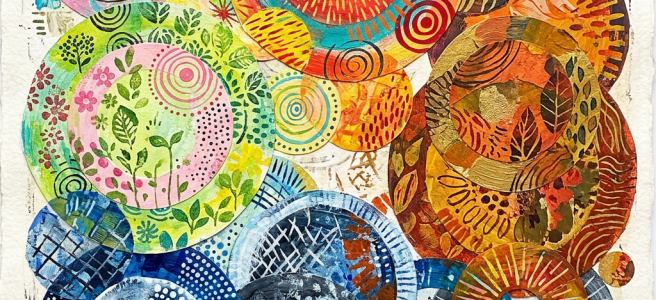
Colorful abstract artwork featuring overlapping patterned circles and botanical motifs

I have a bad habit of treating my life like a software launch. Pick a goal, announce the goal, buy the notebook, and expect a new personality by Thursday. The notebook is usually beautiful. The personality remains in beta.

That is why the Christian liturgical year keeps catching my attention. It does not ask us to become a finished person in one heroic burst. It gives us a rhythm. The United States Conference of Catholic Bishops describes a cycle of seasons and saints that returns again and again: Advent, Christmas, Lent, the Triduum, Easter, and Ordinary Time. The point is not merely to remember dates. The cycle is meant to draw people into the mystery of Christ and into lives shaped by it.

Formation is repetition with meaning

Modern life loves the sprint. Thirty days to a new body. Ninety days to a new business. One inspirational podcast to a new soul. Some of these promises are useful. Most are wearing very fast shoes.

A season works differently. It gives a theme enough time to sink below the level of a slogan. Advent, for example, is not simply a countdown to Christmas. The USCCB presents it as a four-week season of preparation for both Christ’s birth and his promised return, a time of alertness, hope, and a heart made quieter. You do not “win” Advent. You practice receiving it.

Historically, this rhythm grew rather than dropped from the sky fully assembled. Britannica traces Sunday worship to the apostolic age and describes how other observances and seasons developed over centuries. That matters. It means formation can be organic. A community repeats what helps it remember, then refines the repetition until the calendar becomes a kind of shared memory.

The long middle counts

We tend to notice beginnings and endings. New Year’s Day. Graduation. Retirement. Before-and-after photos. But the long stretch called Ordinary Time makes a quieter claim: ordinary days are not empty space between meaningful events. They are where a life is practiced. Scripture is heard. Patience is attempted. We fail, apologize, and try again without a dramatic soundtrack.

This is good news for anyone whose progress feels unimpressive. A season gives you permission to return. You can begin Lent tired. You can enter Easter still carrying questions. You can come back to prayer after missing a week without issuing a press release about your spiritual collapse.

What happened, what it meant, what to carry forward

What happened? I kept trying to force change through intensity. What did it mean? I had confused urgency with faithfulness. What can I carry forward? Choose one season-shaped practice for the next few weeks: a Sunday review, a short daily prayer, a weekly act of generosity, or simply five minutes of silence before the phone gets a vote.

Do not demand a new self by Thursday. Return to the practice next week. Then the week after that. A life is not formed in a sprint. It is formed by what we keep coming back to.

Advent Is the Season That Teaches Us Not to Grab the Gift Too Soon

Lit candle in metal holder with pine branches and red berries on wooden table

I have a small Advent problem. By the time the first purple candle appears, I am already trying to skip ahead. I want the party, the presents, the good news — preferably now, and with free two-day shipping. Waiting feels like a clerical error in the calendar.

But Advent is not merely Christmas with a slower loading screen. The United States Conference of Catholic Bishops explains that Advent begins the Church’s liturgical year and covers the four Sundays and weekdays before Christmas. It carries two directions at once: remembering Christ’s first coming and looking toward his return. The season is preparation, expectation, and — here is the tricky bit — joy that has not arrived in full yet.

That makes Advent a surprisingly good lesson in delayed gratification. Not the grim version where we grit our teeth, deny every pleasure, and congratulate ourselves for being miserable. The better version says: a good thing can be worth waiting for, and the waiting can shape the person who receives it.

The history is older than my annual attempt to buy gifts before Thanksgiving. Britannica notes that the Council of Tours mentioned an Advent season in 567, while the season’s length and customs developed over time. In other words, Christians have been practicing the art of not rushing Christmas for a very long while. I find this comforting. My impatience is not innovative.

Waiting also exposes what I think the gift is supposed to do for me. If I believe Christmas must rescue the month from every awkward conversation, unfinished project, and tired child, I am asking one day to carry too much. Advent gently puts the question back on the table: What am I actually hoping for? More stuff? More control? Or a way of being present to the people already in the room?

Pope Benedict XVI once described Advent as a time when faith becomes one with the human experience of waiting, and asked what our hearts are waiting for. That Vatican reflection lands because it does not treat waiting as dead time. Waiting reveals our loves. It gives them a shape we can inspect.

A small household practice might be enough. Pick one ordinary desire and let it remain unfinished for a week. Do not fill every quiet minute. Leave one purchase in the cart. Let the children count the days without turning the countdown into a performance review. Use the space to notice what rises: gratitude, anxiety, boredom, maybe an idea that has been waiting for you.

This is not an argument for becoming a holiday monk. Advent has candles, music, cookies, and the occasional aggressively cheerful sweater. The point is not to flatten delight. It is to let delight arrive as a gift instead of treating it like a package we can force onto the porch.

What happened? The Church made a season out of waiting. What did it mean? That preparation is not the opposite of joy; it is one of joy’s ways of becoming deep. What can I carry forward? I can practice receiving one good thing without demanding that it solve everything. Maybe that is enough for today: stay awake, leave a little room, and let the gift come when it comes.